



.jpg)

The Ultimate Guide to Growing Indoor Succulent Plants
Succulent plants can be grown all year round indoors to provide greenery and life for your space. The best part about succulent plants is that they store water very efficiently, so they do not need frequent watering. They have thicker, fleshier leaves and stem systems. They are perfect for low-light areas. While cacti are considered succulents since they store water, not all succulents are cactus plants there are many different varieties!
You can grow tall indoor succulent plants or smaller succulents. These colorful plants can also grow in small pots that can be placed in various locations throughout your home. Here at The Hill Apartments in Kansas City, we love to help our residents come up with one-of-a-kind ways to decorate their homes, which is why we've put together the ultimate guide to growing and caring for indoor succulents.
Cat-Safe Succulent Plants
Zebra Plant (Haworthia fasciata) takes up very little space, and it does not require much care. Members of the Haworthia plant family are pet-friendly. The plant is small and tidy with horizontal white stripes on the green leaves. The plant will thrive in a shallow pot in indirect light. It should only be watered when dry. The plant is only five or six inches tall.

Echeveria succulents are also cat-safe indoor plants. There are several varieties of this type of succulent, including the light blue Moon Chanille, Copper Rose, and Painted Lady, that are easy to grow in small pots. The plants have a rose appearance. They need indirect light, and they should be watered only when dry.
Ponytail Palm (Beaucarnea recurvata) looks like a small palm, but it is a semi-succulent relative of the Yucca. This plant will work well in dry winter homes. The stem base stores water, and the thick, leathery leaves do not dry out. It is okay if you forget to water the plant occasionally. The plant grows slowly, up to eight feet in containers. These attractive plants are safe around cats and dogs.
Sedum morganianum Burrito (Sedum Burriton), is one of the most popular and easy-to-grow succulents. It has rows of fleshy, blue-green leaves in teardrop shapes. It is also known as "Burro's Tail", and it can be planted outdoors as well. It grows to over three feet tall. This plant needs indirect sunlight. Purple to pink and red flowers may appear in small clusters in the spring. It requires well-drained soil in pots, and it should only be watered when dry. It can grow in a hanging planter. Sedum plants are cat-friendly and not toxic.
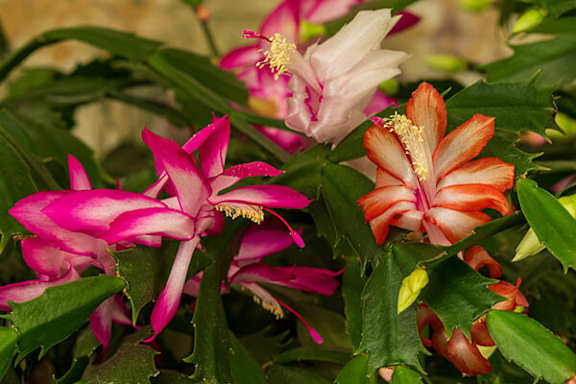
Christmas Cactus (Schlumbergera) is a small genus of cacti that has flowers at the tips of the leaves during the winter months. The plant requires bright indirect light and water only when it is dry. This small plant has deep green leaves all year. It needs cold winter nights between 45 and 55 degrees to encourage the flower buds.
Succulents Considered Toxic to Animals
The Aloe Vera is one of the most popular and hardy succulents. The plant has traditional healing properties along with its eye-catching appeal, since the gel from the plant is used to treat burns. The Aloe Vera grows one to two feet tall and wide. It should be watered only when the soil is dry. Aloe Vera requires partial sunlight. It is toxic to animals due to the presence of toxins in the outer layer of the plant. The inner gel is not toxic.
Bird's Nest Sansevieria (Sansevieria trifasciata 'Hahnii') is toxic to animals since it contains saponins. Most of the sansevieria plants, including Mother-in-Law Tongue, should not be around cats or dogs. The Bird's Nest plant is small with leathery leaves in various shades of green that form in a whorl. Plant suckers fill pots with side shoots from the main plant. These shoots can be re-potted. The plant requires dry air and low light.
The Bird's Nest variety grows about 12 inches, while the Mother-in-law Tongue can grow several feet in height.
String of Pearls (Senecio rowleyanus) is a hanging plant. It actually looks more like a string of peas or green beads arranged along the dangling stems. This is a good plant for dry winter homes. The plant grows fast with the stems dangling three feet. The stems can be cut and replanted in the same pot. This plant needs bright indirect light. Water only when it is dry.
The White Desert Rose thrives indoors in bright, direct sunlight. This succulent needs warm temperatures and well-draining soil. The potted plant can be moved outdoors during warm weather below 65 degrees F. The soil should be dry before watering. This plant is prized for its lovely white flowers.
Panda Plant (Kalanchoe tomentosa) is often referred to as "pussy ears," but it is not safe around cats since it contains insoluble calcium oxalates. The leaves bear small, white hairs that have a fuzzy feel. Leaf edges have dark red hairs that give the inner parts of the plant the look of a rose. This plant thrives in dry air, but it needs bright indirect light.

Care for Succulents in Your Next Home
We hope that you’ve found the perfect succulent to add to your personal plant collection. These plants require little care, and most are easy to propagate. That means you can grow new plants from cuttings that come directly from the original plant. Overwatering can ruin succulent plants since they store water. If you’re looking for your next apartment home in Kansas City, visit us at The Hills Apartments. We offer well designed 1, 2, and 3 bedroom floor plans that masterfully blend comfort, style, and spaciousness. Every home is fitted with a double galley kitchen layout, energy efficient appliances, hardwood-style flooring, plush carpeting, and other modern features. Schedule your tour today and discover your next home for you and your favorite succulents!